Founded in Bengaluru to solve a problem that starts today
Pramatra Space was established in 2023 by a team that had been working independently on satellite quantum optics, post-quantum cryptography, and network infrastructure -- and concluded that the harvest-now threat made satellite QKD deployment urgent for South Asian financial and infrastructure networks.
Quantum-safe infrastructure before the quantum threat arrives
The harvest-now, decrypt-later attack is not a future risk. Adversaries with long collection mandates are archiving encrypted traffic today. The window between "harvesting starts" and "quantum computers can decrypt" is already open -- it opened the moment adversaries decided RSA and ECDH were worth storing.
Pramatra's mission is to make satellite QKD accessible to the networks that carry the most sensitive long-lived traffic in South and Southeast Asia: interbank settlement, energy grid control, and government communications. Our goal is not to replace existing infrastructure but to make it quantum-safe within the operational constraints it already operates under.
- 01South Asian critical networks carry high-value long-retention traffic
- 02Fiber QKD requires dedicated dark fiber that operators do not have
- 03Satellite QKD removes the fiber constraint without replacing hardware
- 04NIST finalized PQC standards in 2024, establishing the algorithm foundation
Three founders, three disciplines

Richa's background is in satellite communications protocol design and constellation network architecture. Before founding Pramatra Space, she worked on secure ground-station relay systems, building direct familiarity with the engineering challenges of moving cryptographic material from satellite-sourced channels to terrestrial networks. She leads Pramatra's commercial approach and customer relationships.
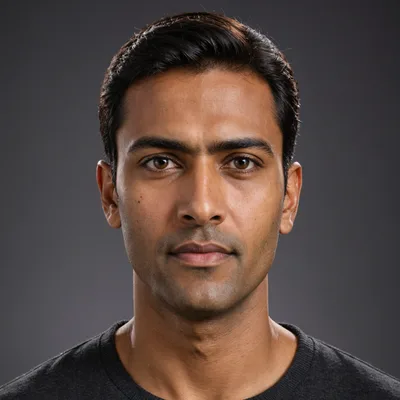
Devraj specializes in post-quantum cryptography protocol engineering and key management infrastructure for high-assurance communications networks. His work before Pramatra Space centered on building key management systems where the assurance requirements are set by government network operators rather than commercial timelines. At Pramatra Space, he leads the technical architecture for the KMA appliance, the ETSI QKD API layer, and the PQC hybrid integration.

Fatima came from academic research in quantum information security, where her work focused on lattice-based and code-based post-quantum cryptographic constructions and QKD protocol verification toolchains. She brings direct research-to-implementation experience: from formal analysis of ML-KEM and ML-DSA security reductions through to the engineering decisions involved in deploying those algorithms in constrained network hardware. She leads Pramatra's cryptographic architecture and PQC hybrid integration.
How Pramatra Space was built
The three founders met through a quantum technology working group organized by an industry association focused on emerging technology policy. At the time, each was working independently on adjacent problems: Richa on satellite data commercialization, Devraj on quantum payload miniaturization, and Fatima on PQC protocol implementation for network hardware.
The conversation that started Pramatra was practical: what would it take to provide satellite QKD key delivery to a mid-size private sector bank in India that needed post-quantum security but had no dedicated dark fiber, no tolerance for major infrastructure changes, and a regulatory environment that was just beginning to ask about quantum readiness?
The answer was a stack that starts with an orbital photon source, lands at a ground station, flows through a compact KMA appliance, and surfaces as a standard ETSI QKD API that existing network management systems already understand. That is what Pramatra Space is building.
Get in touch
Bengaluru, Karnataka 560001, India